Muay Thai Clinch Basics: How to Control a Fight Up Close

When our coaches talk about Muay Thai, one of the first skills they focus on is the clinch. A clinch is a close-range standing position where fighters control posture and balance to limit incoming strikes while creating opportunities for knees, elbows, and sweeps. It is one of the most important tools in Muay Thai and a skill that truly separates experienced fighters from the rest.


Many people picture Muay Thai as a long-range striking art built around powerful kicks and sharp elbows. Those who train consistently know that the clinch is where control is developed and maintained. 


At Ground Control Sykesville, we spend a significant amount of time teaching clinch fundamentals because it allows fighters to stay composed and take control when space closes, and exchanges become tight.


Through years of coaching students of all levels, we see the same lesson repeat itself. The clinch is not about strength. It is about posture, balance, timing, and awareness. When applied correctly, it slows the fight down, drains an opponent’s energy, and allows you to remain calm while they struggle to regain control.

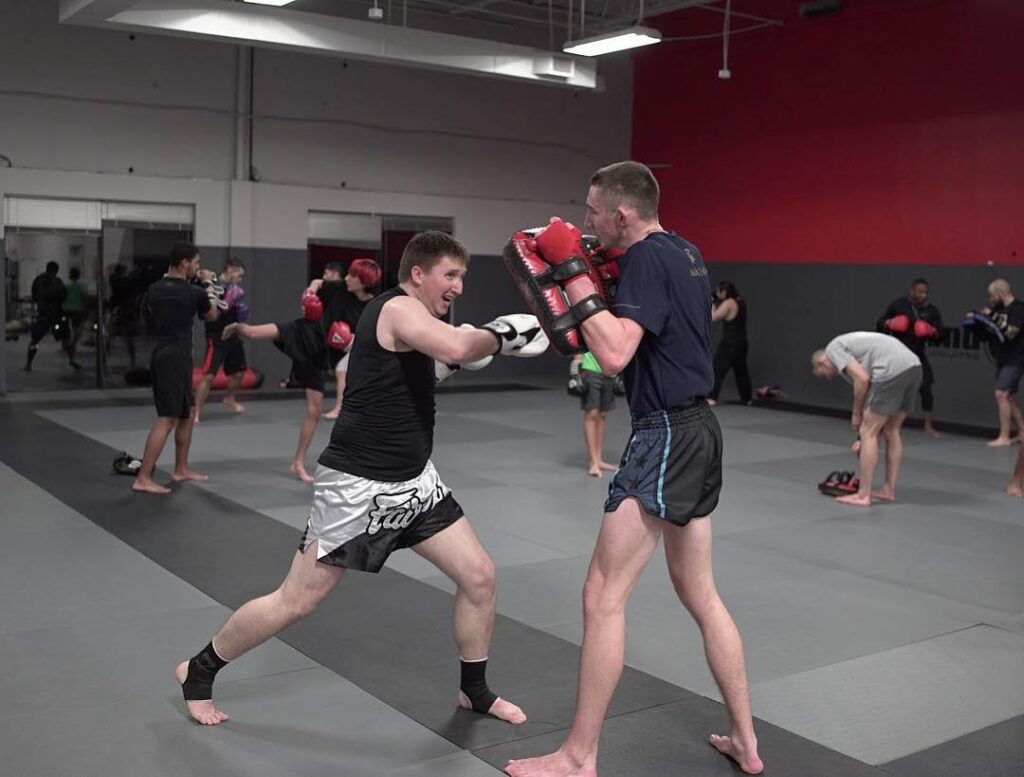
Martial arts student practicing punching on strike pads

What the Muay Thai Clinch Really Is

When introducing the clinch to students, we explain it as a standing control position rather than a wrestling exchange. The Muay Thai clinch is designed to disrupt your opponent’s posture while maintaining your own base. Unlike boxing clinches that are often used only to reset, Muay Thai clinching is active and intentional.


From this position, fighters can deliver knees, elbows, and sweeps while limiting their opponent’s striking options. A solid clinch forces the opponent to carry weight, fight for posture, and stay defensive, which steadily wears them down both physically and mentally.

Posture and Balance Come First

One of the first lessons we coach in the clinch is posture. Without proper posture, control disappears quickly. Fighters who allow their head to drop or their hips to drift backward become easy to off-balance.


Proper posture means staying tall through the spine, keeping the hips under the shoulders, and remaining light on the feet. At Ground Control Sykesville, we emphasize small foot adjustments rather than relying on strength. Good balance allows fighters to deliver strong knees while staying protected.


Strong posture also improves safety by reducing exposure to elbows and limiting the opponent’s ability to control the head.

Hand Positioning and Control

Hand placement plays a major role in clinch success. One common position is the double collar tie, where both hands control the back of the opponent’s head. From there, posture can be manipulated, angles created, and knees delivered efficiently.


Clinch control is not limited to one grip. Inside control, overhooks, underhooks, and wrist control all play an important role. The goal remains the same. Break the opponent’s posture while protecting your own. We encourage students to think of their hands as guides, relying on timing and pressure rather than pulling with force.

Using Knees, Elbows, and Off-Balancing

Once control is established, offense becomes more effective. Knees to the body are a primary weapon in the clinch because they disrupt breathing and drain energy. Elbows come into play when an opponent attempts to posture up or escape. Short, controlled strikes can shift momentum without sacrificing balance.


Off-balancing is another essential clinch skill. Small pulls, turns, and angle changes can cause an opponent to stumble or fall. At Ground Control Sykesville, we teach that off-balancing relies on timing and awareness, making it especially effective against aggressive fighters who overcommit.

Why the Clinch Matters for Every Student

Clinch training is valuable for more than just competition. These skills improve balance, body awareness, strength, and confidence for all students. Clinch control also plays an important role in self-defense by limiting strikes and creating safe opportunities to disengage.


For those training for fitness, clinch work provides full-body conditioning and endurance that few drills can match.

Train the Clinch with Purpose at Ground Control Sykesville

From a coaching standpoint, the clinch is one of the most valuable tools in Muay Thai. It rewards patience, control, and smart positioning rather than overpowering an opponent.


At Ground Control Sykesville, our coaches break down clinch fundamentals step by step so students of all levels can build confidence and skill in close-range fighting. Whether the goal is competition, self-defense, or personal development, mastering the clinch will elevate your Muay Thai training.


If you are ready to learn how to control a fight up close, we would love to train with you. Join Ground Control Sykesville and experience Muay Thai coaching focused on real skill, smart strategy, and steady progress.

Don’t Stop Here

More To Explore

Train Smart: 5 Essential Tips to Stay Safe During Jiu-Jitsu Training

Brazilian Jiu-Jitsu has become one of the most popular martial arts in the world for good reason. It offers practical self-defense skills, a challenging full-body workout, and a supportive training community. One reason the sport continues to grow is that it can be practiced safely by people of many ages and experience levels when proper training habits are followed.

Read More »

Join Us

Try A Class
For Free